

how long to cook pernil
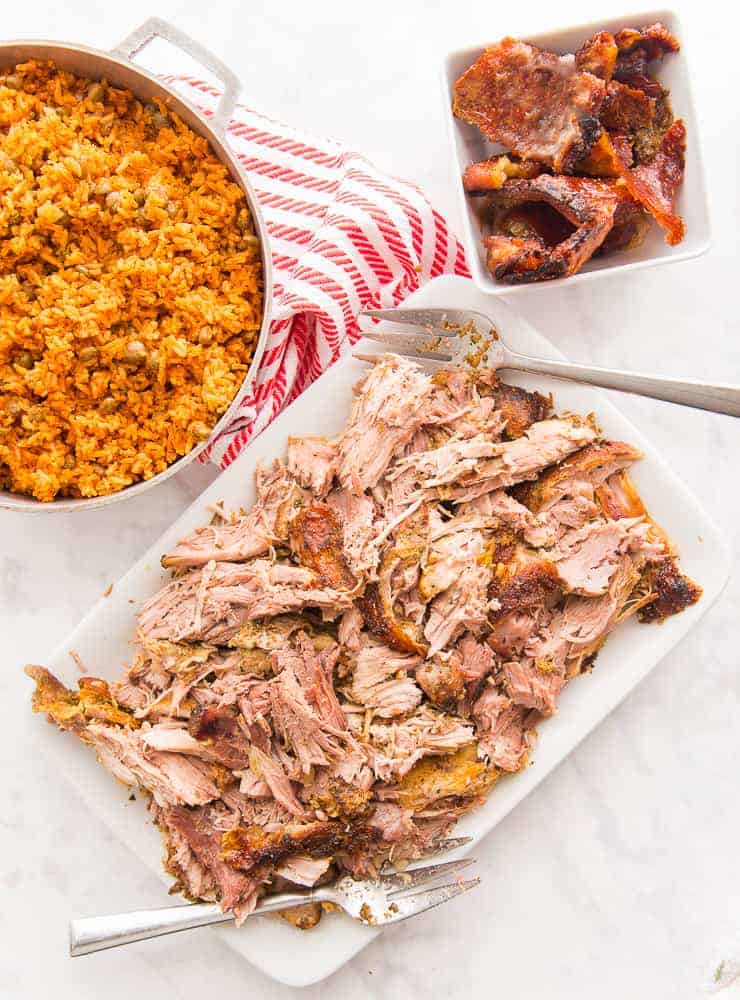 Let me tell you about the time my husband almost stabbed a guest in our home over the skin you see in the photo above. It was traumatic. It was scary. Totally justifiable, but still scary. That right there sitting atop that mound of deliciousness is chicharrón. Pork rind. Crackling. Heaven. It is one of the many rewards for making this Pernil, or Puerto Rican Roast Pork Shoulder.
This is holiday food.Pernil is the food that, when you smell it roasting in your home, you know something's about to go down. I makeit for any special occasion…even if that occasion is called "Wednesday night". My family doesn't stand for formality. We're a simple tribe.
What is Pernil? What's the difference between it and Lechon?
For starters, pernil is the shoulder picnic cut of the pig. To make a traditional pernil, it must be bone-in and skin on. Don't go getting all froufrou talking about, "I want boneless, skinless." You'll be"chicharron-less" and flavorless and you won't be happy with yourself. The joy of life is crunching down on a crispy piece of the skin and eyeballing anyone who dares trifle with your portion. Ask Hector's buddy. He had a flesh wound, y'all. A pernil is flavored with tons of garlic and a sofrito paste before marinating for at least 2 days. It's roasted to a crispy, juicy perfection and that's that.
A lechon is a whole pig roasted over a spit. They're seasoned the same way, however, one induces more guilt than the other. Not for me, mind you. I'm good looking at a pig's head while I eat it's ribs.
What cut of meat is pernil?
When you look for your pernil, seek out pork shoulder. You want a bone-in, skin-on pork shoulder that's at least 10 pounds. Leftover pernil is a must, my friend. If you can't track down a pork shoulder, look for a Boston Butt. Same deal: bone-in, skin-on. Because both, the shoulder and the butt, are tough cuts of meat, we roast our pernil slowly. Those areas on a pig put in work during its life, so they're very tough. Between the extended marinating and the long roast, you will end up with a pernil that can be pulled apart.
What do I need to make a roast pork shoulder?
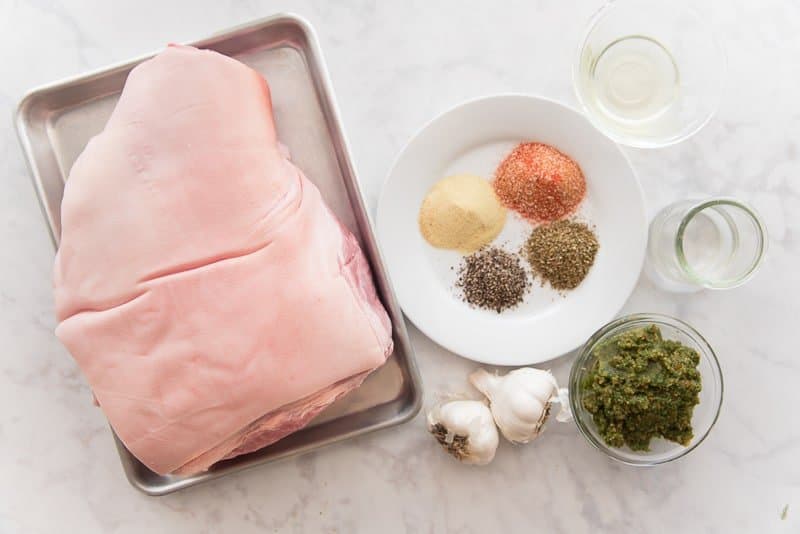
I'm very simple in the way I season my pernil. It's my method that's less than traditional. But, in order to get to the untraditional method I use, we need to start with our shopping list.
For starters: our spice paste is made with a TON of fresh garlic. Like, 2 heads. Use tons of garlic because that's the most prominent flavor in a traditional pernil.When I tell you you cansmell apernilbeing roasted from outside, I'm not exaggerating. It's intensely seductive.Onion powder is the next ingredient in my spice paste. Loads of it as well. I don't use fresh onion, because it's hard to get a smooth paste. The chunks of onion will char on the outside of the pernil which doesn't taste good. Finishing the spice paste is sazón, adobo, dried oregano leaves and black pepper. Sazónis a flavoring and coloring ingredient which iswidely popular in Puerto Rican cuisine, as is adobo. Feel free to use store-bought or homemade versions of those two.
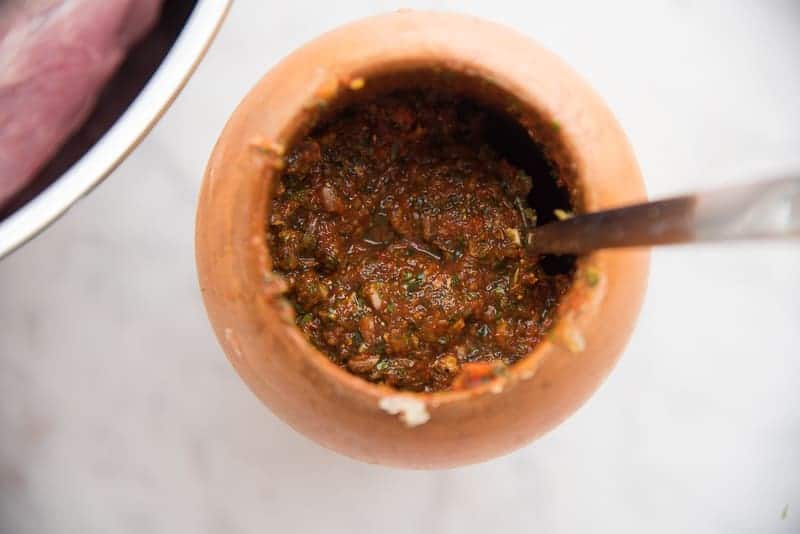
After mashing the garlic to smithereens and mixing in the spices, I add sofrito. Sofrito is an herb cooking base which is made from a blend of culantro, onions, garlic, and sweet peppers. Learn more about sofritohere , but suffice to say, this stuff will change your life. Spoon it into the spice rub and mix well in the same vessel you mashed your garlic with. You can see I use a wooden mortar and pestle. A food processor or blender also works. If you don't have either, crush the garlic and combine everything with a spoon, instead.
How do I get a crispy skin (chicharrón) on my pernil?
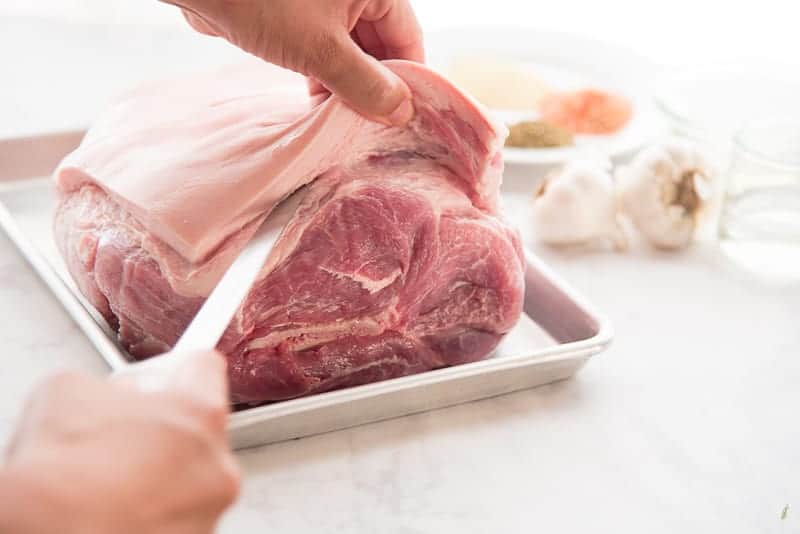
Here's where I begin going rogue. I don't know when, or how, I decided to start separating the top fat layer from the meat of the pork shoulder, but I did and things have never been the same. The first step in achieving that coveted pork crackling on your pernil is to partially separate it from the meat itself. I going to show you how.
Grab a firm hold on the top layer of the skin and, carefully, run your knife's blade along the line where the fat and skin meet. Use a very sharp boning knife for this, if you have one. If not, your chef knife is fine. If you have a properly sharpened knife, it should go through like butter. Don't cut the skin all the way off! Just make a cut between the fat and the meat, leaving the back and sides of the skin attached. Basically, you're making a pocket. Work slowly, cutting away the skin and fat layers from the meaty, dark pink flesh. If you accidentally separate the skin completely, it's okay, you'll just have to lay it back on after seasoning.
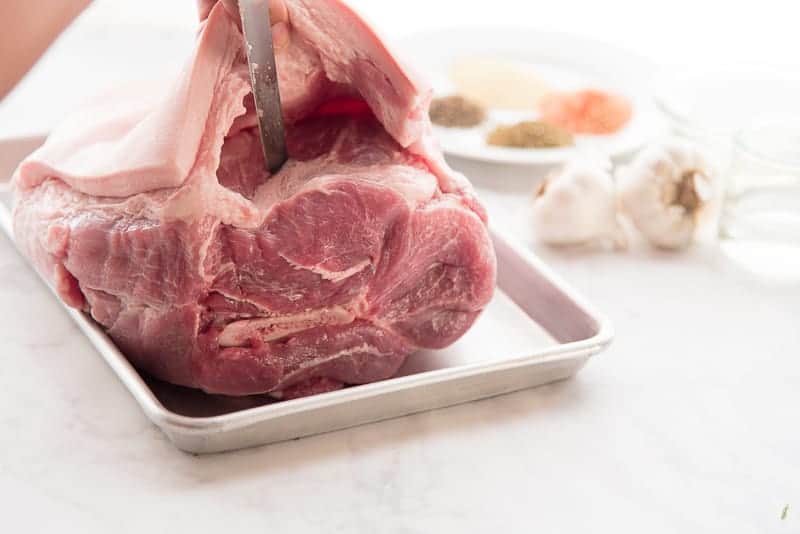
After you create the pocket, pull the skin back a little and pierce slits into the flesh using the tip of your knife. These slits help the seasoning penetrate the meat while it's marinating. Be careful not to puncture the skin, though! We want it to be as intact as possible prior to roasting. Flip the roast over and make slits in the bottom of it as well.
Do I need to wash my pernil before cooking?
Yes, but not in the way you think.
Both my Black and Latin cultures are used to washing their meat under cold running water prior to cooking. I no longer do that because I've been brainwashed by my time in the kitchen. That said, feel free to rinse your meat if that's how you learned.
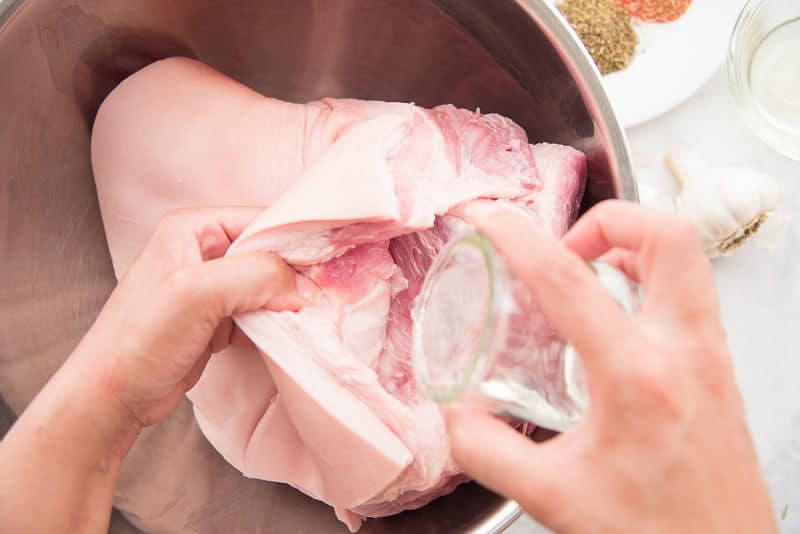
When it comes to the pernil, however, you need to "wash" the meat once again with white distilled vinegar. The vinegar's acid multitasks as a flavoring agent, bacteria and smell killer, as well as a tenderizer. It breaks down the connective tissue in the, otherwise, tough shoulder.
Transfer your pernil to a large bowl (or leave it in the sink if you washed it) and douse it in the vinegar. Rub the vinegar outside the piece of meat, inside the pocket and on the skin. Now you can season it.
How do I season pernil?
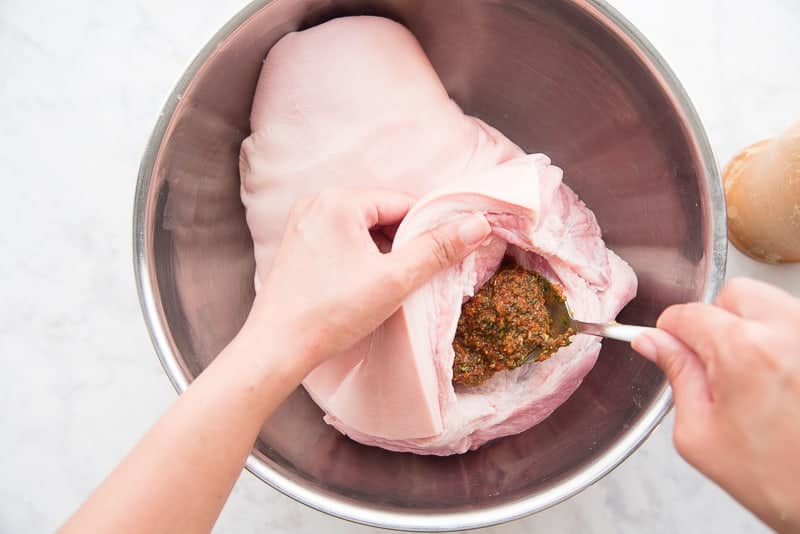
Take your flavoring paste and shove a big spoonful of it in that cavity you made between the skin and flesh. Now, rub it into the meat: make sure to press the paste into those slits in the meat under the skin. Now, flip the pork over and rub the bottom side with another heaping spoon of spice paste. Flip it back over and rub the remaining spice paste onto the the skin. If you don't have a lot of paste leftover, that's okay. You don't want too much paste on the skin when we go to roast it anyway.
How long do I marinate a pernil?
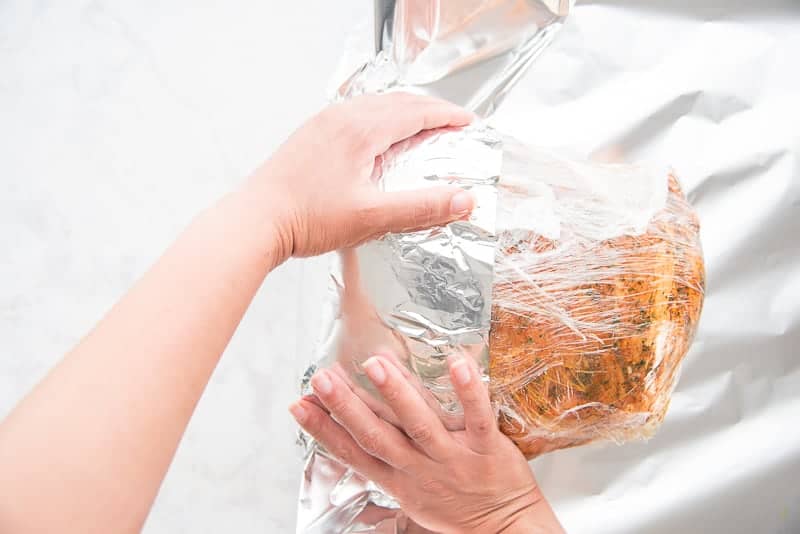
Unconventional step numbers two and three: I marinate my pork for three days and I force flavor into it. By "forcing flavor into it", I mean I trap the spices so that the only place they can go is into the meat. Remember those slits we cut into the meat? This is why we did it.
Let me explain how we force this flavor into the meat: lay out a sheet of heavy duty aluminum foil, and then lay out three sheets of plastic film. Put the seasoned pork in the center of the wrapping film and I wrap it tightly in the plastic first. So tightly, in fact, that my muscular forearm is quite impressive when I do it, is it not?
Stop rolling your eyes.
Swaddled like a little pork cherub. I'm convinced heaven will havepernil. Now, seal it tightly in the foil and let it marinate in the fridge for at least 2 days, but 3 days if you can. The least amount of time I've marinated a pernil was a day, though. It still had an amazing flavor because of the forced flavoring.
Do I roast my pernil covered or uncovered?
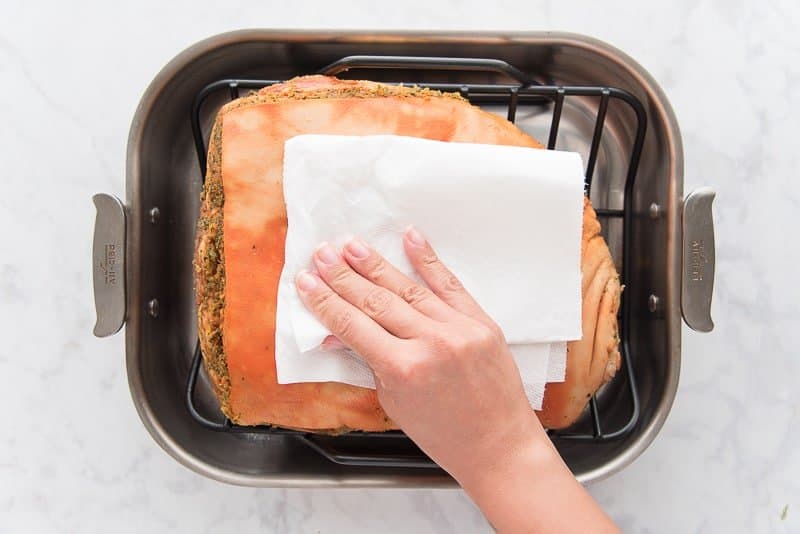
Once you're ready to roast, unwrap it and put it on a roasting rack inside of a roasting pan. The rack keeps the pernil from boiling in its juices. Pat the pernil's skin down with a paper towel to dry it and remove the spice paste. It tends to char if left on during roasting. Begin heating your oven to 350°F, and leave the pork to sit on the countertop for at least 30 minutes to an hour to warm up. A cold pernil takes longer to begin roasting than a semi-warm one does.
Begin the cooking process by cooking at a lower temperature with pernil covered in aluminum foil. This method will steam the pernil and encourage the fat to render out without evaporating. It slowly bastes the meat and gets all liquidy. By the time we remove the foil and crank up the heat, the skin will be ready to crisp up. BUT!!! Don't make the same mistake I did when I first started using this method. Spray your foil with non-stick cooking spray before covering the pernil. I didn't and the collagen from the roasting skin grabbed ahold of some of the foil and wouldn't let go.
So, begin covered, finisheduncovered.
How long do I cook a pernil?
Here's a tip: roast your pernil at 350°F for 35 minutes per pound. So that means a 10 pounder will roast for 5 1/2-6 hours. Calculate # of pounds x 35 = x /60 and you'll have your cooking time- round up to the next quarter of an hour if need be. So:
5 pound pernil= 3 hours roasting time
7 pound= 4 hours
8 pound= 5 hours
9 pound= 5 hours 15 minutes
10 pound= 6 hours
How to get that crispy skin on a pernil
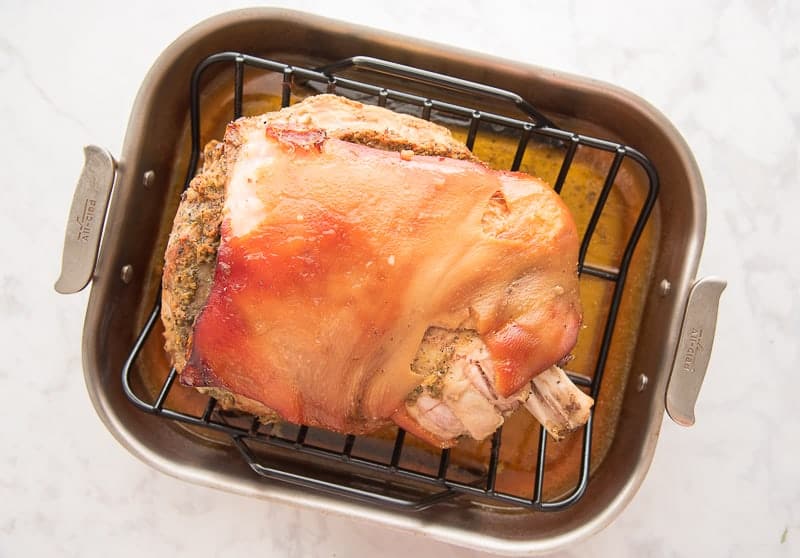
An hour before your cooking time is up, increase the oven temperature to 425°F. Remove the pernil from the oven and take off the foil covering.
Once the oven reaches temperature, put the pernil back in and finish roasting. You might need to turn the pan occasionally to keep one side from going to dark, so do that every 15 minutes or so. The skin will begin to blister and pop and angels will sing.
How do I know when my pernil is done cooking?
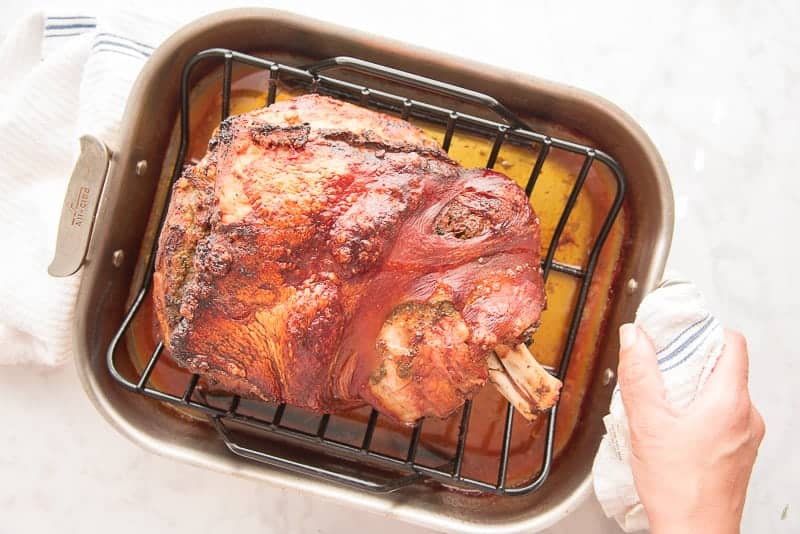
Your pernil should have an internal temperature of between 180-200°F when it's properly roasted.
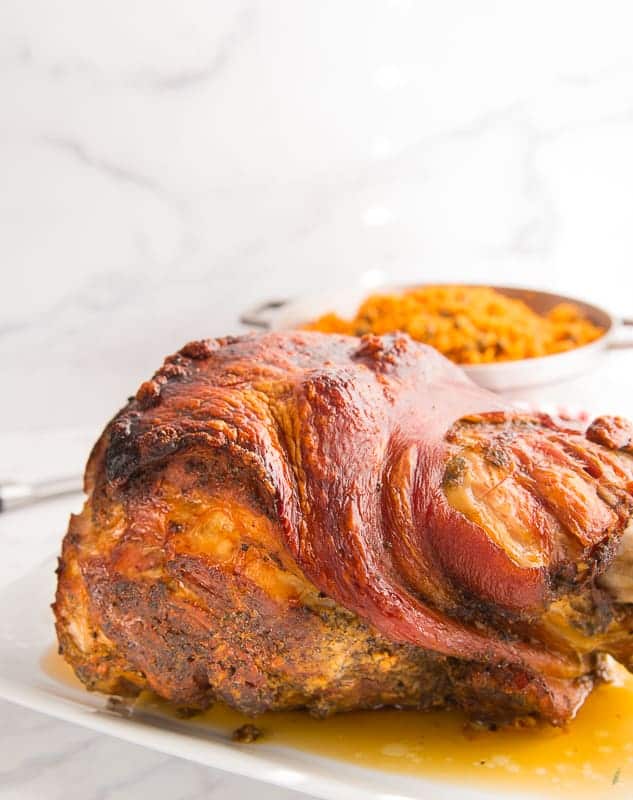
The juices of the pernil will run clear with no blood, as well.
Remove it from the oven and allow it to cool for at least 30 minutes in order to allow the internal juices to settle down.
Can I smoke a pernil?
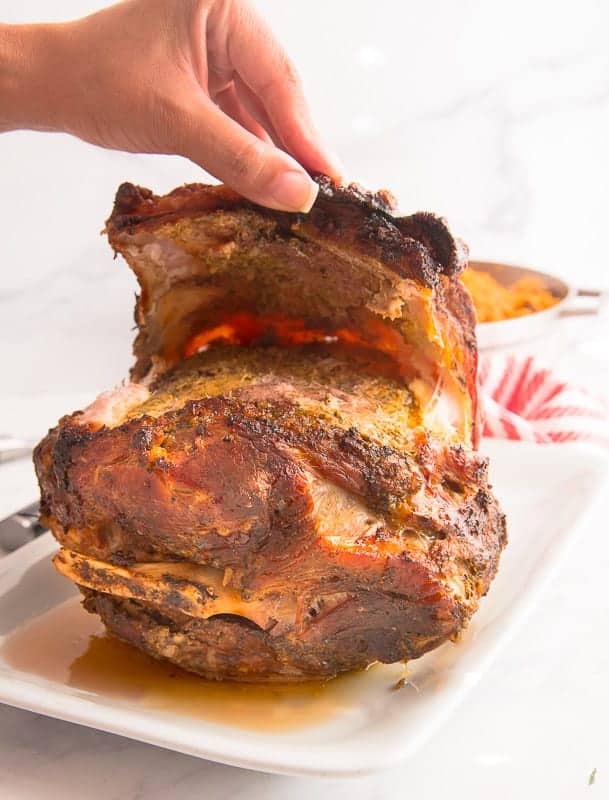
Yes, you can totally smoke this pernil in a smoker for 14 hours, but you won't be left with the amazing crunchy chicharrón. Don't you want to be able to lift a whole slab of a pork rind from your pernil? No, but if you want to smoke it, go for it. My buddy Derek used this recipe for his smoked pernil and said, with the exception of the missing chicharrón, it was amazing.
What other ways can a pork shoulder be cooked?
If you have a rotisserie machine, a pernil would be great cooked in it. You may need a smaller roast to fit in the machine, but it would be similar to roasting a lechon. Just season as normal and follow the machine's instructions for roasting in it.
How do I store leftovers? Does pernil freeze well?
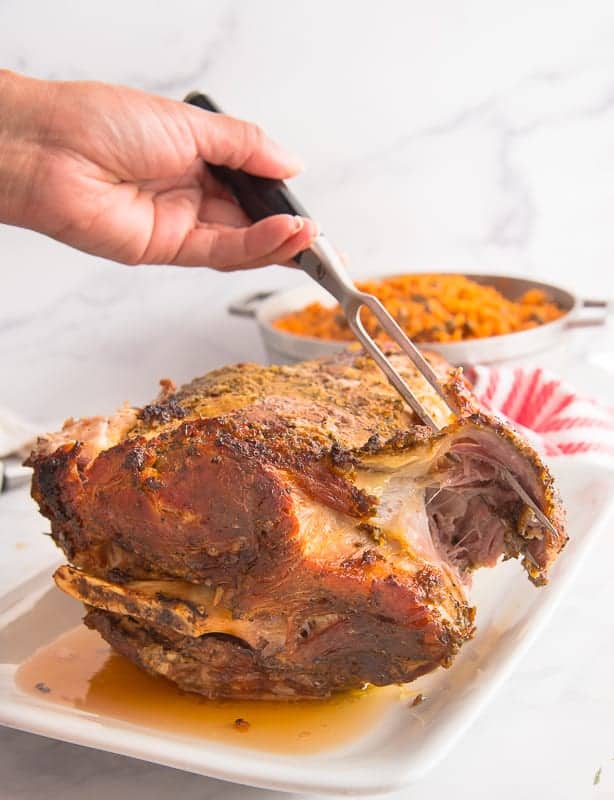
After allowing the pernil to rest a few minutes, remove the chicharrón and shred the meat from the bone. As you can see, I only need a carving fork to do that. Serve the pernil while hot.
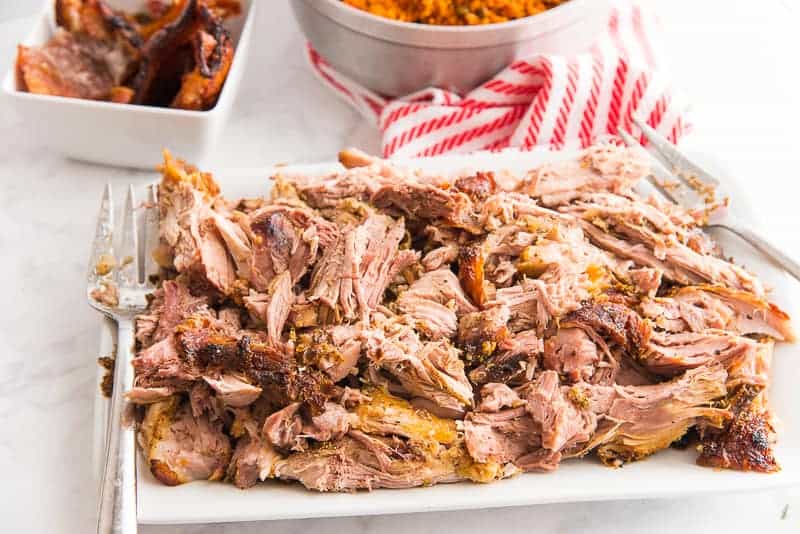
Any leftovers should be transferred to a food storage container and kept in the fridge for 3 days. To reheat the meat, just flick a little water over it and microwave it until warmed through.
Can you freeze pernil?
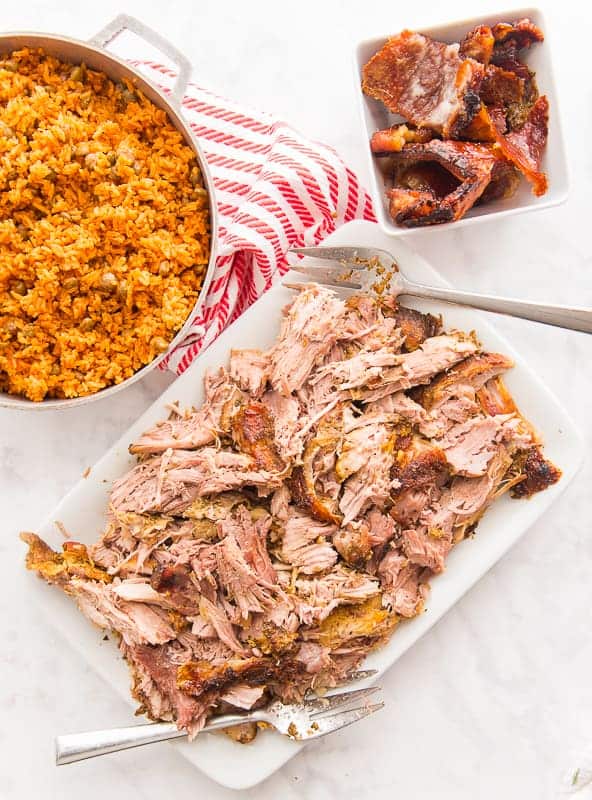
You most certainly can! I actually make a larger pernil for the purpose of freezing half of it for later. The chicharrón is the only thing that doesn't keep past the day it's made, so enjoy that heartily.
Pop the shredded pernil into a freezer storage bag and freeze for 6 months. Thaw in the fridge when you're ready to eat and reheat as instructed above.
Just one taste of this Puerto Rican Pernil and you'll see why my husband almost caught a case over it. Be sure to pin it to all your boards and share it with your friends! If you make it, be sure to tag me on IG or FB: @senseandedibility or on Twitter or Pinterest: @ediblesense!
** This post has been updated with sparkly new images and more concise instructions**

Pernil (Puerto Rican style Roast Pork Shoulder)
A succulent, crisp-skinned pork shoulder is the perfect way to celebrate your happiest occasions.
Course Mains
Cuisine Puerto Rican/Hispanic
Keyword pernil, pork, roast
Prep Time 20 minutes
Cook Time 6 hours
marinating time 2 days
Total Time 2 days 6 hours 20 minutes
Servings 15 servings
Calories 287 kcal
-
Roasting pan with inner rack
- 10 pound pork shoulder bone-in, skin-on
- 1/4 cup white vinegar
- 16 cloves garlic (or 2 heads) peeled and mashed to a paste
- 1/4 cup Sofrito
- 2 tablespoons Adobo seasoning plus more for seasoning prior to roasting
- 2 tablespoons onion powder
- 1 1/2 tablespoons sazón
- 1 1/2 tablespoons dried oregano leaves
- 1 1/2 teaspoons black pepper
Prep the Pork Shoulder
-
Grab a firm hold on the top layer of the skin and, carefully, run your knife's blade along the line where the fat and skin meet.
Use a very sharp boning knife to cut between the fat and the meat, leaving the back and sides of the skin attached- creating a pocket.
-
After you create the pocket, pull the skin back a little and pierce slits into the flesh using the tip of your knife, taking care not to puncture the skin in the process.
Flip the roast over and make slits in the bottom of it as well.
"Wash", then Season the Meat
-
Transfer your pernil to a large bowl (or leave it in the sink if you washed it) and pour the white vinegar outside the piece of meat, inside the pocket and on the skin.
Rub the vinegar into the meat well.
-
In a bowl, combine the mashed garlic, sofrito, adobo, onion powder, sazón, oregano, and pepper to create a thick paste.
Use a large spoon to scoop a third of the paste into the cavity you created between the skin and flesh. Massage the rub it into the meat: make sure to press the paste into those slits in the meat under the skin.
-
Flip the pork over and rub the bottom side with another third of the spice paste.
Flip it back over and rub the remaining spice paste onto the the skin.
Wrap and Marinate the Pernil
-
Lay out a large piece of heavy duty aluminum foil (or enough sheets to completely wrap the pernil). Over the foil, lay out three sheets of plastic wrap.
Put the seasoned pork shoulder in the center of the wrapping film and wrap it tightly in the plastic first, then wrap it tightly in the foil.
-
Set the wrapped pork on a sheetpan and and let it marinate in the fridge for at least 2 days, but 3 days if you can.
You can roast the pernil in as little as 12 hours, but it won't be as flavorful.
Roast the Pernil
-
When you're ready to roast, unwrap the pernil and put it on a roasting rack inside of a roasting pan. Pat the pernil's skin down with a paper towel to dry it and remove the spice paste. Season the outside of the pernil with a light sprinkling of adobo.
Begin heating your oven to 350°F, and leave the pork to sit on the countertop for at least 30 minutes to an hour to warm up. A cold pernil takes longer to begin roasting than a semi-warm one does.
-
Lightly spray a piece of aluminum foil with non-stick cooking spray and cover the pan of pernil- sprayed side down.
Roast the pernil at 350°F for 5 hours.
-
When the roasting time is up, increase the oven temperature to 425°F.
Remove the pernil from the oven and take off the foil covering.
Once the oven reaches temperature, put the pernil back in and finish roasting for 1 hour. (You may need to turn the pan occasionally to keep one side from going too dark, if so, do that every 15 minutes or so.
The skin will begin to blister, harden, and sizzle.
-
The fully cooked pernil should have an internal temperature of between 180-200°F. The juices of the pernil will run clear with no blood, as well.
Remove it from the oven and allow it to cool for at least 30 minutes in order to allow the internal juices to settle down.
-
After allowing the pernil to rest a few minutes, remove the chicharrón and shred the meat from the bone.
Serve the pernil while hot.
Pernil Roasting Times:
5 pound pernil= 3 hours roasting time
7 pound= 4 hours
8 pound= 5 hours
9 pound= 5 hours 15 minutes
10 pound= 6 hours
Smoking Instructions:
- Follow instructions as directed.
- Smoke the pernil with your preferred wood at 250°F for 15 hours.
- You won't be left with the amazing crunchy chicharrón with this method, so remove the skin or chop it up and mix it in with the pulled pork.
To Store Cooked Pernil:
Any leftovers should be transferred to a food storage container and kept in the fridge for 3 days. To reheat the meat, just flick a little water over it and microwave it until warmed through.
To Freeze Cooked Pernil:
Transfer the shredded pernil to a freezer storage bag and freeze for 6 months. Thaw in the fridge when you're ready to eat and reheat as instructed above.
Calories: 287 kcal | Carbohydrates: 3 g | Protein: 37 g | Fat: 13 g | Saturated Fat: 5 g | Cholesterol: 124 mg | Sodium: 214 mg | Potassium: 673 mg | Fiber: 1 g | Sugar: 1 g | Vitamin A: 20 IU | Vitamin C: 3 mg | Calcium: 45 mg | Iron: 3 mg
These recipes go great with this pernil:
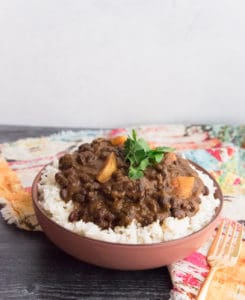
Habichuelas Guisadas (Stewed Beans)
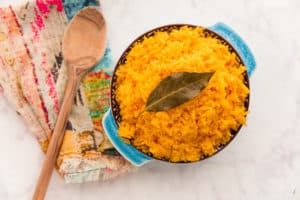
Arroz Borracho (Beer-Steamed Yellow Rice)
how long to cook pernil
Source: https://senseandedibility.com/pernil-roast-pork-shoulder/
Posted by: simmonsbromys.blogspot.com
0 Response to "how long to cook pernil"
Post a Comment