

How To Reduce Image Size In Photoshop

How To Resize Images In Photoshop
Resizing an paradigm is one of the virtually ordinarily used skills in all of Photoshop. It's so common, in fact, that even people who know near zip about Photoshop nonetheless manage to use it to resize their images, which should give y'all an idea of how piece of cake it is to practise.
In this tutorial, we'll larn how to resize images, besides as a general rule to keep in heed then your resized photos remain well-baked and sharp. I'll be using Photoshop CS5 here simply the steps are the same with any recent version of the program.
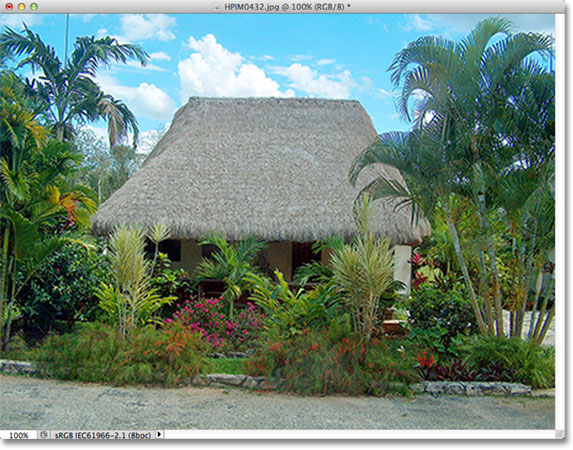
Hither's an image I have open on my screen:
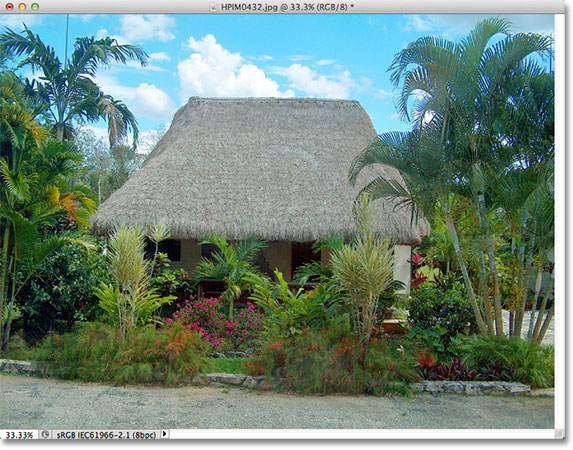
The original photo.
This is a photo taken on a trip to Mexico. Of course, the original version of the photo was much larger than what we're seeing here, merely I've resized information technology and fabricated it smaller then it fits meliorate on the page. How did I practice that? It'south easy. To resize an image in Photoshop, we use the Prototype Size command which we tin can get to past going upward to the Image menu in the Bill of fare Bar along the top of the screen and choosing Image Size:
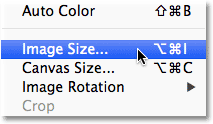
Go to Image > Image Size.
This will bring up the Image Size dialog box, equally shown below:
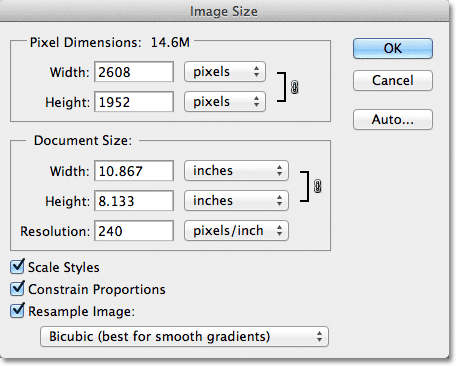
The Image Size dialog box.
This screenshot of the Image Size dialog box was taken immediately afterward I opened the original photo, before I resized it to a smaller version for displaying on the folio. If you lot look closely, you'll notice that the dialog box is divided into 2 primary sections - Pixel Dimensions and Document Size - each showing unlike measurements. Since this tutorial is all almost how to resize an paradigm, we only demand to business ourselves with the tiptop section, Pixel Dimensions, since it's the 1 that controls the actual, physical dimensions (in pixels) of the photograph.
Allow's look more closely, then, at the Pixel Dimensions section, which tells united states two things near our image. First, if we expect directly to the right of the words "Pixel Dimensions", we can meet the current file size of the image. In my case, it's telling me that my photo is fourteen.6 M (the "M" stands for megabytes, or "millions of bytes"):
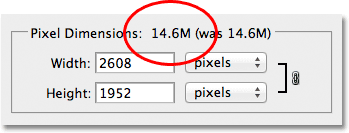
The electric current file size is displayed to the right of the words "Pixel Dimensions".
Knowing the file size of the image can be useful if y'all want to compare the size of the original version with the resized version, only information technology doesn't assist us actually resize our image. For that, we need the other bit of information that the Pixel Dimensions section is telling us - the electric current Width and Tiptop of our image:
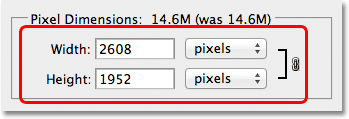
The electric current width and summit of the image, in pixels.
Here, we run across that my original photo was 2608 pixels broad by 1952 pixels high. At that size, I'd have no trouble printing a bang-up looking 8x10, but I needed a smaller version, one that would fit better on these pages. So how did I make it smaller? I simply changed the numbers in the Width and Elevation boxes to what I needed! I'll set the new width for my image to 900 pixels and the height to 647 pixels (of course this is simply an example, you can enter whatsoever size you need):
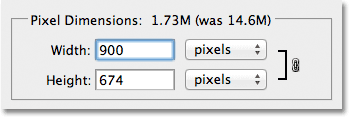
Inbound new Width and Height values for the prototype.
To change the Width and Height values, simply double-click inside one of the two boxes (either Width or Meridian), which volition highlight the number currently showing in the box, and so type a new value. When you're done, click the OK button and Photoshop will resize your prototype to the new dimensions you've specified.
You lot tin as well resize your prototype by a percentage of the original paradigm size rather than typing in a specific pixel value. If you look to the right of the Width and Height value boxes, you'll notice that the measurement type is currently set to pixels, but if you click on either the word "pixels" or the pointer to the right of the give-and-take, a driblet-down carte will appear which lets you change the measurement blazon to percent:
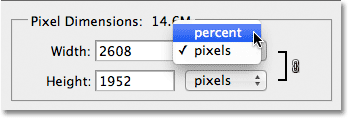
Changing the measurement blazon from pixels to percent.
One time you've called pct as your measurement type, the Pixel Dimensions department volition display the width and top of your image equally a percentage rather than a pixel value. Resizing the paradigm using a pct is done the same way equally if you lot were using pixel values. Merely double-click inside the Width or Height value box and blazon in a new percentage. When you're washed, click the OK button and Photoshop will resize the image to whatever percent value you entered.
You'll notice, unless you've inverse the default settings, that when you enter in a new Width or Height value, the other value changes automatically. In other words, if you try to change the value for the width of your image, the height will modify along with it. That's because by default, Photoshop keeps the original aspect ratio of the image intact when you resize information technology, which is usually what you want. Unremarkably, you wouldn't change the width of a photo without irresolute the meridian likewise, otherwise things volition look distorted. Photoshop lets u.s.a. know that the width and top values of the image are currently linked together by displaying a linked icon to the correct of the values:
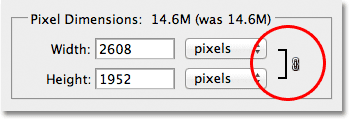
This icon tells us that the Width and Pinnacle values are currently linked together.
If you look virtually the bottom of the Paradigm Size dialog box, yous'll encounter the Constrain Proportions pick which controls whether the width and pinnacle are linked. Past default, the option is selected, simply if you lot demand to alter the width and top separately, simply uncheck this choice:
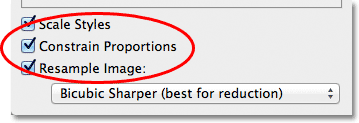
The Constrain Proportions choice keeps the attribute ratio intact just can exist disabled if needed.
Resizing And Image Quality
Resizing images in Photoshop may be easy, but there's something very of import to keep in mind when it comes to maintaining paradigm quality. In general, it's okay to make a photograph smaller than its original size, but you desire to avoid making it larger whenever possible. Allow's look at an case.
Let'due south say I demand to make the width and height of my photograph smaller by 50 percent. To exercise that, in the Image Size dialog box, I'll simply change both the Width and Acme values to 50 percent:
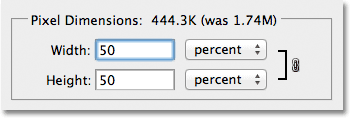
Reducing the size of the prototype.
I'll click OK in the top right corner of the Epitome Size dialog box, at which bespeak Photoshop closes the dialog box and resizes my image. Since I fabricated both the width and pinnacle smaller by fifty percent, the photograph is at present one fourth of its original size:
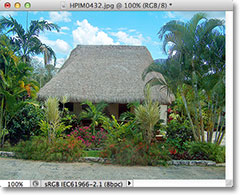
The paradigm later resizing the width and acme by 50 percent.
As we tin see, the photo is now much smaller but the overall paradigm quality remains pretty consistent. Let's see what happens, though, if I have this smaller image and endeavour to overstate it back to its original size. To do that, I'll re-open the Paradigm Size dialog box by going upward to the Image card at the top of the screen and choosing Image Size, so I'll set both the Width and Height values to 200 percent:
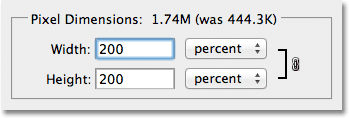
Changing the Width and Height values to 200 percent.
I'll click OK to have the values and close out of the Image Size dialog box, at which indicate Photoshop enlarges the image, making it four times the size it was a moment ago:
The image later on increasing its size by 200 percent.
Let'southward compare the image quality of the enlarged version with that of the original version:
The original photo.
By enlarging the prototype, I've managed to return it to its original size, but when we compare the quality with that of the original, the enlarged version clearly doesn't look as skilful. We've lost a lot of detail in the image, and it'due south starting to look soft and blurry. If I was to enlarge it even further, the image quality would grow progressively worse.
Here'southward why. When you utilize the Image Size control to make a photo smaller, Photoshop makes it smaller essentially by throwing away pixels. Information technology just takes some of the pixels from the image and tosses them out the virtual window. Fortunately, Photoshop is really good at knowing which pixels to throw abroad without sacrificing paradigm quality, so making our images smaller isn't unremarkably a problem.
The trouble comes in when we ask Photoshop to brand our images larger. If Photoshop makes them smaller past tossing pixels away, how practice you think it makes them larger? If you answered, "Past adding pixels to the image", you'd exist right! Only here's the bigger question. Where does Photoshop get these new pixels from that information technology's adding to the image? If you answered, "Um, I'grand not sure. I approximate it just kind of makes them up out of thin air", you'd exist right once again!
And therein lies the trouble. When Photoshop makes an image larger, it has to add pixels that were not at that place before, and since Photoshop wasn't on the scene when you lot took the photo, it has no idea what a larger, more than detailed version of the prototype should actually wait like, which means information technology has to guess. Of class, Photoshop is a very powerful program and its guesses are based on some very complicated and advanced math, but at the end of the 24-hour interval, it'due south still just a guess, and information technology'south non going to guess correctly. Bottom line, the larger you try to make your image, the worse your epitome is going to expect. Instead of the sharp, highly detailed version you were hoping for, you'll get something that looks dull, soft and blurry.
So again, when resizing your epitome, it'south okay to brand your images smaller, but y'all should avoid making them larger at all toll unless yous absolutely don't care nearly image quality. And really, who doesn't intendance about paradigm quality? That's just nonsense.
Other Stuff
© 2022 Photoshop Essentials.com.
For inspiration, not duplication.
Site design past Steve Patterson.
Photoshop is a trademark of Adobe Systems Inc.

How To Reduce Image Size In Photoshop,
Source: https://www.photoshopessentials.com/essentials/image-resizing/
Posted by: simmonsbromys.blogspot.com
0 Response to "How To Reduce Image Size In Photoshop"
Post a Comment